

A BGV agent is visiting your current or former workplace. You don't know what they'll ask, who they'll speak to, or what gets reported back.
Here's exactly what happens — so you're not caught off guard.
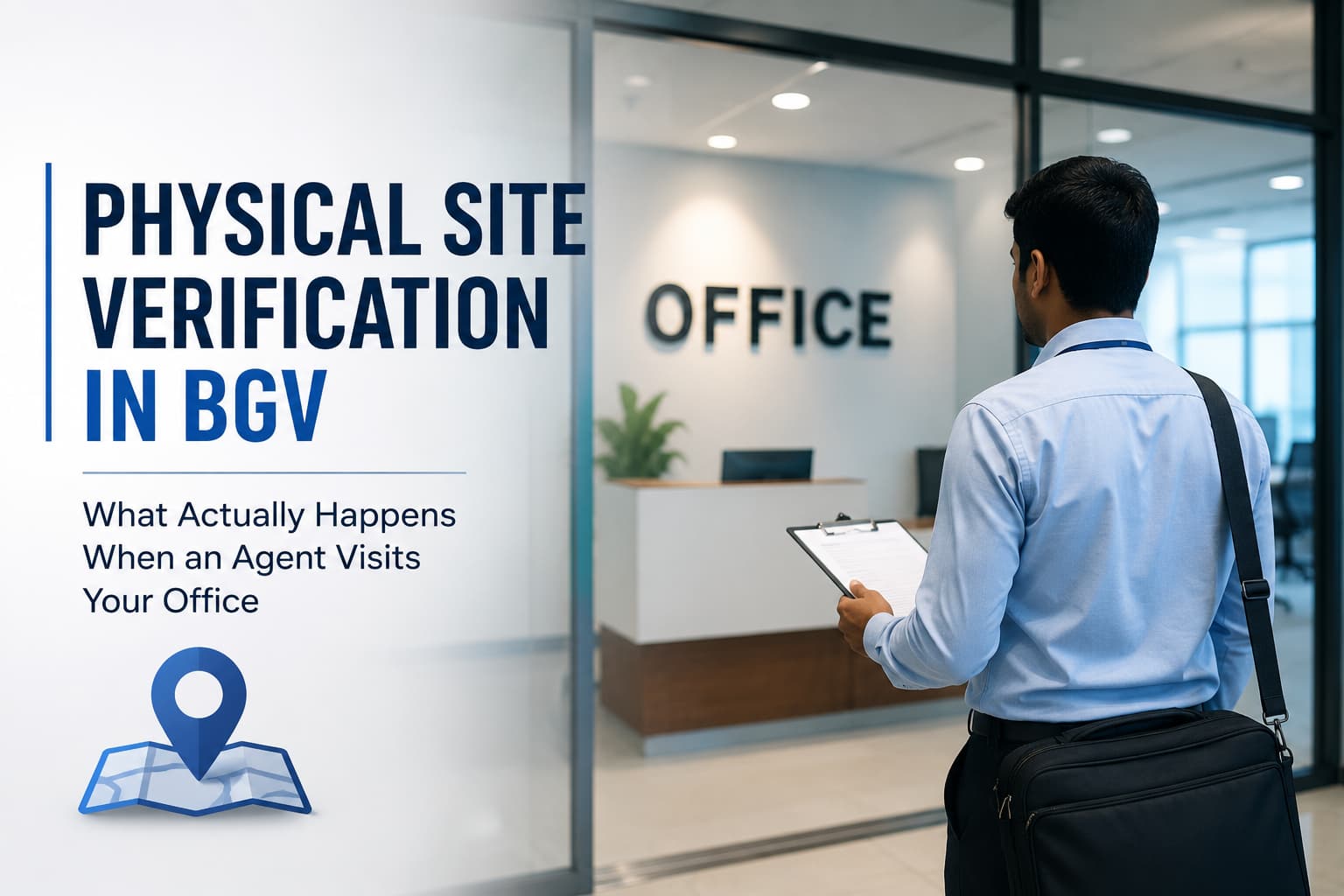
What Is Physical Site Verification?
Physical site verification (PSV) is when a BGV agency sends a field agent to physically visit an address you've listed — usually a current or previous employer, or sometimes your residential address.
It's one layer of the broader background check process. Unlike document verification or database checks, PSV confirms that a place actually exists and that your claimed association with it holds up in person.
Not every BGV includes a physical visit. It depends on the role, the hiring company's policy, and the risk level of the position. If you want to know more how a BGV agency works, then read our lates blog.
Why Do Companies Order a Physical Visit?
A document can be forged. A phone call can be misdirected. A physical visit is harder to fake.
Companies typically order PSV when:
- The role involves financial access, sensitive data, or client-facing responsibility
- There are inconsistencies in your documents that need ground-level confirmation
- The employer address you listed appears unusual or unverifiable online
- You're joining a BFSI, IT, or government-adjacent organisation with stricter compliance norms
For most mid-level corporate roles, PSV is standard practice — not a sign that something is wrong with your file.
What Does the BGV Agent Actually Do During the Visit?
Here's what a typical physical site visit looks like, step by step.
Step 1: Arrive at the Office
The agent arrives at the address you listed. They do not announce the visit in advance to you — only to the HR or admin point of contact at that organisation (if at all).
They first confirm the basic facts: does this address exist, does the signage match the company name, is it an active operational office?
Step 2: Meet HR or the Front Desk
The agent approaches the HR department or reception. They introduce themselves as a verification agent and present their agency ID.
They will typically ask HR to confirm:
- That you were employed at the organisation
- Your designation and dates of employment
- Whether you are eligible for rehire
- Sometimes, your last drawn salary band (not always)
They do not roam the office. They do not speak to your former colleagues or manager without HR's involvement.
Step 3: Document Cross-Check
If HR is available and cooperative, the agent may ask to physically sight your employment records — not take copies, just verify that the records exist and match what you claimed.
This is a quick check, not an audit.
Step 4: Observe and Report
The agent notes the physical condition and legitimacy of the office — is it a real working space, are employees present, does it match the scale of the company you claimed to work for?
This matters especially if you listed a small firm or startup. An agent visiting a ghost address or a residential flat posing as a company is a clear red flag.
Step 5: File the Report
The agent returns to the agency and files a structured verification report. This includes:
- Whether the address is genuine and active
- What HR confirmed about your employment
- Any discrepancies between your application and what was observed or stated
- A site photograph in some cases
This report goes to the hiring company — not to you directly.
Will Anyone at Your Old Office Know You're Being Verified?
Yes — HR will know. That's unavoidable.
Your former colleagues at the desk level? Almost certainly not. The agent's interaction is limited to HR or a designated admin contact.
If you left on good terms and your paperwork is clean, the visit is entirely routine. HR departments handle these requests regularly.
What If the Office Has Moved or Shut Down?
This happens often — especially with startups or companies that were acquired.
If the agent visits and finds:
- The office has relocated: They'll note the discrepancy and cross-check the new address against MCA or company registration records. Not an automatic red flag.
- The company has shut down: The agent files a "unable to physically verify" status. The BGV agency then falls back on EPFO records, documents, or a call to a former HR contact if reachable.
- The address never existed: This is a serious flag. It suggests the employer itself may have been fabricated.
If your former company has closed or moved, inform your new employer's HR before the BGV starts. It saves time and prevents unnecessary escalation.
What Can Get You Flagged During a Physical Verification?
Most visits are uneventful. But these situations create problems:
- The address you listed doesn't exist or is a residence — especially if you claimed it was a corporate office
- HR denies your employment — this could be a records issue or something more serious
- Your designation doesn't match HR records — even a small title difference matters
- The company looks nothing like what you described — for example, claiming a 500-person firm when the office has five desks
Minor mismatches get noted. Major ones get escalated to the hiring company for a decision. In case there are major issue like blacklisted, then this blog might help you.
How to Prepare Without Overthinking It
You don't need to do anything special if your documents are accurate.
A few practical steps:
- Make sure the address on your résumé matches your appointment or relieving letter exactly
- If your former company has moved or closed, keep a note ready to share with your new HR team
- If you worked at a small firm or a home office setup, have your payslips and form 16 ready as supporting proof
- Don't coach anyone at your former workplace — HR will answer standard questions truthfully, and any coaching attempt can backfire
The visit is a formality for most people. The agent is not there to investigate you. They're there to confirm facts.
The bottom line: A physical site visit is a routine step in a thorough BGV process. If your employment history is accurate and your documents are consistent, there is nothing to worry about.
Frequently Asked Questions
1. Will the BGV agent inform me before visiting my office?
No, agents typically do not announce the visit to you in advance. They may coordinate with the employer's HR department but will not reach out to you directly before a site visit.
2. What if my old office has shifted to a new location?
Inform your new HR about the address change before the BGV starts. The agent will note the discrepancy but it's not an automatic red flag if you can provide the correct address and supporting documents.
3. Can I fail BGV if my former employer's HR gives wrong information?
Yes, errors in HR records can cause discrepancies. You can counter this by providing your offer letter, relieving letter, payslips, or EPFO records to prove your actual employment details.
4. Is physical site verification done for all job roles?
No. PSV depends on the role, industry, and company policy. It's more common for BFSI, IT, government-adjacent, and senior roles. Many mid-level corporate jobs may not require a physical visit.
Need Help with Employment Documentation?
Contact Dreamsoft Consultancy today for a Free Career Documentation Audit.
Contact on WhatsAppVisit: experiencedocuments.com
